
Guide for first‑time buyers


How great that you’ve found your way to us at Eqvor!
Interest in unlisted shares has grown rapidly in Sweden in recent years, leading many first‑time buyers to turn to us at Eqvor.
We receive several calls each day from first‑time buyers with practical questions about how to purchase unlisted shares. The purpose of this text is to answer all those questions and thoughts one might have before stepping into this world.
There is a difference between public and private unlisted shares.
It might sound strange that there are public unlisted shares, but it’s actually true.
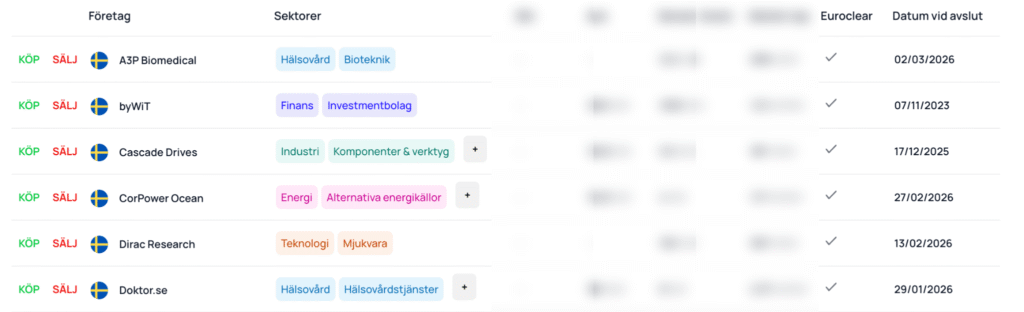
When you look at unlisted companies to invest in, you’ll find both public and private ones. The difference between them is that public unlisted companies are connected to Euroclear and are known as “reconciliation companies.” In practice, this means you can store these shares in a regular securities account, for example at Avanza or Nordnet. This also means that when you buy this type of share, it will be delivered directly to your account. Unfortunately, they cannot be held in an ISK (investment savings account).
When you look at unlisted companies to invest in, you’ll find both public and private ones. The difference between them is that public unlisted companies are connected to Euroclear and are known as “reconciliation companies.” In practice, this means you can store these shares in a regular securities account, for example at Avanza or Nordnet. This also means that when you buy this type of share, it will be delivered directly to your account. Unfortunately, they cannot be held in an ISK (investment savings account).If you’ve ever owned a listed company that was later delisted, you may have noticed that the share still appears in your account but with a value of zero. That’s a public unlisted company — and that’s exactly how it will appear in your portfolio when you buy a public unlisted share through us at Eqvor.
In the share list for all stocks, you’ll find two buttons: “Public companies” and “Private companies.” Click on these buttons to view the respective lists of each type of share.
Example of a private company:
How does pre‑emption work, and what does it mean?
Now that you know the difference between private and public companies, let’s go through a pre‑emption or right of first refusal — the next thing you might encounter. Some companies include a pre‑emption clause in their shareholders’ agreement. In short, this means that existing shareholders have the right to purchase the shares you intend to buy, under the same conditions as you, before you do. Usually, they have around 20–30 days to make this decision.
Let’s take an example to show how this might work in practice.Suppose you’re buying 1,000 shares in Company A at 1,000 SEK per share, and Company A has a 30‑day pre‑emption clause. Here’s what happens:
How does order placement work in practice on Eqvor?
You now know the difference between public and private companies, as well as how a pre‑emption clause can affect a transaction. Now, let’s go through how the actual process of placing an order on Eqvor works — when and how payment is made, and the steps you’ll need to go through.
Order placement
The first step is to place an order. Go to “All shares” in the menu and click “Buy” on the share you want to purchase. You’ll then be asked to specify how many shares you want to buy and at what price. After that, choose whether you’re buying as a company or as a private individual. If you’re buying as a company, you’ll need to provide the company name and organization number.Next, you’ll be asked to fill in which account you want your shares delivered to (note: this only applies if the company is public). Then click “Submit” to create your order.In the final step, you’ll need to complete a KYC (“Know Your Customer”) form. This is a legal requirement that we must collect to comply with laws on anti‑money laundering and counter‑terrorist financing. You only need to fill in the KYC form the first time you place an order.
After you’ve placed your order in the system, you’ll receive an order agreement sent to your email. This agreement specifies the share you’re buying, the quantity, the price, and Eqvor’s commission for the transaction. Once you’ve signed this agreement, the order becomes binding and will appear in our order flow on the website (you remain fully anonymous).
You can cancel your order at any time — either by clicking the “Cancel” button or by calling or emailing us, and we’ll cancel it for you. It’s completely free to place an order and free to cancel one; you only pay commission if your order is executed and you receive the shares you purchased.
Transfer of funds
You never need to transfer money to Eqvor or keep funds in an account or custody with us in order to trade, as you would on platforms like Avanza or Nordnet. When your order has been executed, you’ll receive a notification from Eqvor — and only then is it time to pay for the shares.
If the company you’ve purchased is public, you’ll receive a contract note that you send to your bank or brokerage — the one from which you want the payment to be withdrawn. The contract note contains all the instructions your bank needs to transfer the funds. It also serves as your receipt for the transaction and as documentation for accounting and tax purposes.
If the shares you’ve purchased are in a private company, you’ll need to sign an additional agreement once your order has been executed — a so‑called Purchase Agreement between you and the seller. This agreement specifies the terms of the transaction and the account to which the payment should be transferred.The agreement also states whether the shares are subject to a pre‑emption clause. However, Eqvor will always inform you about this when you place your order, so you know what to expect.If the shares are subject to a pre‑emption clause, you must wait for that process to be completed before transferring your payment. If the existing shareholders choose not to buy the shares, you then transfer the funds to the account specified in the Purchase Agreement — or instruct your bank to make the payment according to the agreement.
Receiving of shares
After you’ve transferred the payment, it’s time to receive the shares.
If the company you’ve bought shares in is public, the shares will be delivered directly to the account you specified when placing your order. Usually, the shares are delivered to your account within two banking days after you’ve transferred the payment.
If the company is private, you’ll be registered directly in the company’s shareholder register. You’ll then receive a message from the company’s management or the person responsible for investor relations, confirming your registration and providing proof of your ownership.
Done! You are now a shareholder in an unlisted company and get to be part of an exciting journey.
Frequently Asked Questions (FAQ)
Is there a risk that I transfer the payment but never receive the shares?
No, this cannot happen.
When you buy public shares, both the buyer and seller transfer funds and shares to the securities company Evida AB, to which Eqvor is a tied agent. Evida is a licensed securities firm supervised by the Swedish Financial Supervisory Authority (Finansinspektionen). Once Evida has received both the funds and shares from the respective parties in the transaction, they transfer the payment to the seller and the shares to the buyer. If the seller does not fulfill their obligation, your funds will be returned to you.
When you buy shares in a private company, the company’s management is aware of the transaction and will notify you when it’s approved to transfer the funds. This means there is no possibility for the seller to receive payment without delivering the shares, since the management controls and updates the company’s share register. You will also receive proof once the share register has been updated.
We at Eqvor are with you every step of the way, keeping you updated throughout the process so that you always know what’s happening and what’s expected of you.
How do I sell my shares?
If you want to sell your shares in the future, simply follow the same instructions as under the “Order Placement” section — but this time, click Sell instead of Buy. Instead of specifying a securities account, you’ll now provide the bank account where you’d like to receive the payment once the transaction is completed.
